April 2, 2026
How to Design Memorable Dining Experiences, According to a Michelin Guide Chef
Michelin Young Chef Award winner Nicolás Tykocki shares how coherence, authenticity, and sensory design create memorable restaurant experiences.
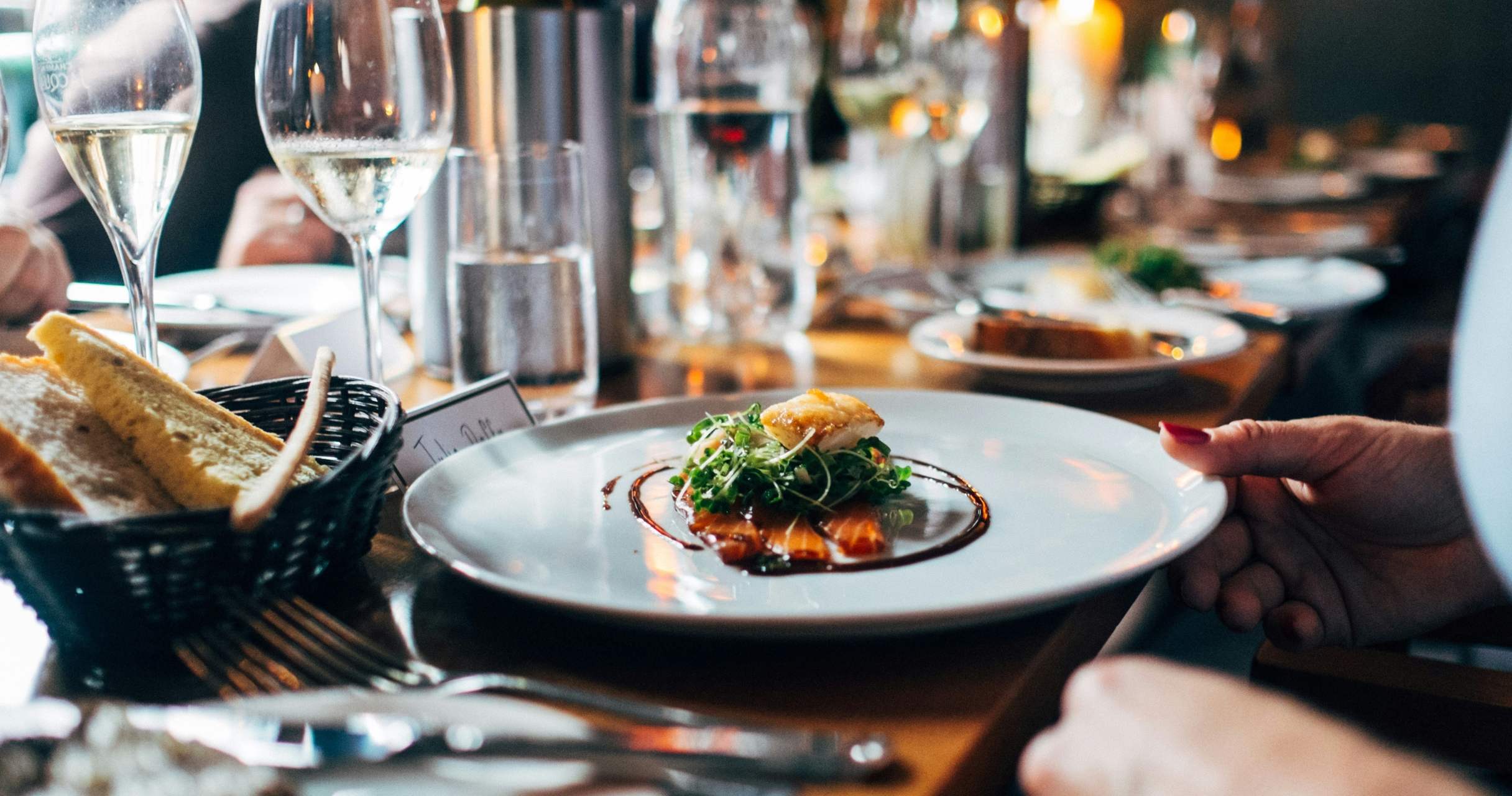
Just like many other industries, gastronomy is evolving at a rapid pace. Opening a restaurant, bar, or café is no longer just a culinary bet, it's about crafting a complete experience for every guest. In a saturated market with growing competition, what truly makes the difference is identity and total coherence.
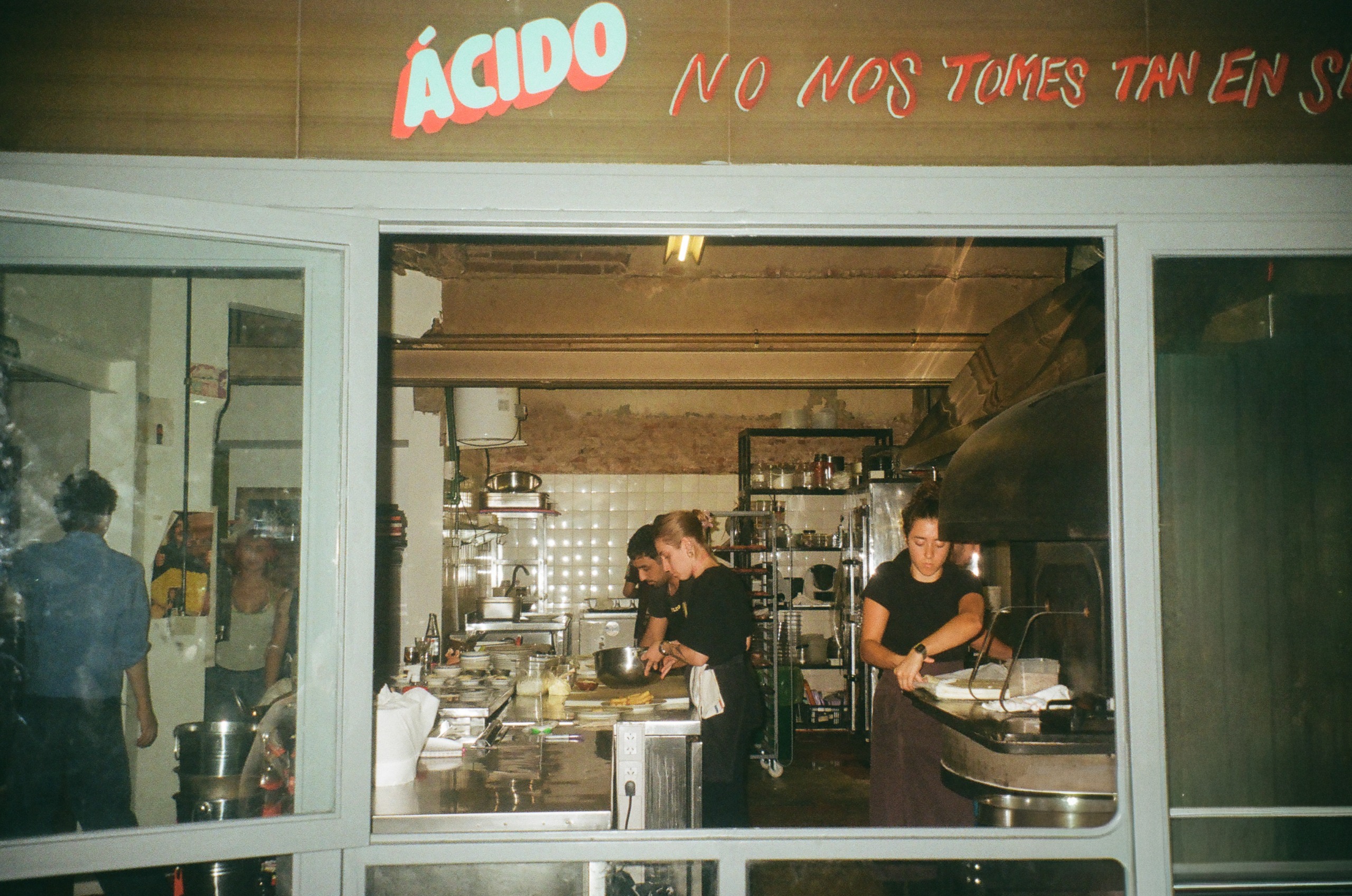
At Brandtrack, we spoke with Chef Nicolás Tykocki, owner of Ácido in Buenos Aires, a Bib Gourmand restaurant in the Michelin Guide and winner of the 2025 Michelin Young Chef Award, about how to build dining experiences that genuinely offer something unique. For Nicolás, the real differentiator lies in the overall experience in which the guest is immersed, not just what arrives on the plate.
What Makes a Restaurant Experience Feel Coherent?
A restaurant is not built on scattered ideas or isolated concepts. It must be built with criteria. "It's not a concept, it's not an idea, it's not orders. It's a shared criterion, defined by the owners and embraced by the entire team," Tykocki explains.
That criterion should guide every decision: how guests are welcomed, how staff communicate, what music is played, and what lighting is chosen. When this exists, the experience becomes a coherent system: "Everything has to respond to the same logic. Otherwise, it shows. Guests may not know how to explain what feels off, but they feel that something doesn't quite add up."
This is why the details that seem secondary, background music, lighting, and spatial flow, are actually structural. They either reinforce the identity or quietly undermine it.
Why Does Authenticity Matter More Than Pleasing Everyone?
Another key element in dining experiences today is authenticity. In a world increasingly shaped by social media, many projects are designed with the photo in mind before the real experience. "I think we do a lot for social media and a lot to please customers, when what truly connects are authentic experiences. And honesty can't be faked; it has to be genuinely honest," said Tykocki.
This may sound almost countercultural: looking inward rather than outward. "What you need to measure is yourself. Look inward and understand what you truly offer. Try to do what you genuinely want to do, instead of being overly driven by what others want."
Following trends or copying formulas guarantees nothing. The goal is not to appeal to everyone, but to clearly understand who you are and sustain that identity with conviction.
How Does Sensory Design Shape the Dining Experience?
The sensory dimension in gastronomy is just as important as the food itself. Lighting, smells, music, and space build as much as the menu does, because the sensory experience is fundamental. As Nicolás explains, "the role of music is defined by the owners. It can be extremely important or not important at all. But if you want it to be important, then it really has to be. What you can't do is stay halfway."
He adds, "I love nearly silent places with very soft jazz. And I'm also fascinated by places with loud speakers where you have to raise your voice to talk. Both work, if they are aligned with what the place wants to be. What doesn't work is a lack of definition."
This is exactly the principle behind Brandtrack's approach to restaurant music. Rather than leaving the sonic environment to chance, or to whoever's on shift, platforms like Brandtrack let restaurant owners define their sound identity and keep it consistent across every service, every location. Smart Playlists adapt in real time to customer traffic, time of day, and even weather, so the music always matches the moment without requiring manual effort from the team.
The equation, according to Tykocki, is simple: food, experience, and price are the three non-negotiable pillars. "If you fail in one of those three, there's no chance."
Excellence appears when everything else aligns and supports that foundation, allowing every part of the experience to speak the same language.
Being, Not Pleasing
Criteria, coherence, authenticity, and a holistic sensory vision are the foundations of great dining experiences today. It's essential to define a clear identity, sustain it with honesty, and express it in every detail, from the plate to the lighting in the room.
Because, as Nicolás Tykocki puts it: "The difference is not in pleasing. It's in being."